Editor's Note from SamuraiFunn:
In my playgroup we host quarterly Premodern tournaments that usually draw solid crowds of 30-40 players. The competition is usually pretty high and the room is typically filled with people who have performed well at big events, written deck primers, or are otherwise active in the PM community. So when Kevin took down the most recent event with a mono-white Rebels brew, it immediately caught my eye. I couldn't stop thinking about the deck in the days that followed. Every time I thought I found a deck that might have good game against it, a closer examination of the list changed my mind. For this reason, I've been excited to get inside the mind of its creator, and do a deeper dive on the matches from the tournament. Enjoy!

I would not consider myself an expert on Rebel decks. But here are my thoughts on the list I recently played. In an earlier Discord chat, Mark hit the nail on the head about it not feeling like an aggro deck. The list is more a low-curve midranged deck that focuses on disrupting the opponent’s tempo by forcing them to play sub-optimally. To do this, most of the cards are relatively reactive in nature.
Mother of Runes
Ramosian Sergeant
Whipcorder
True Believer
Swords to Plowshares
Disenchant
Reverent Mantra
These form the core of this reaction-based game plan. Removal and blocks are difficult with Mom on the table. Sergeant allows the deck to generate threats while keeping mana up for instant speed answers. Whipcorder dominates both defensively and offensively, dictating who gets to be the attackers or blockers–which means the opponent has a hard time depending on a core threat to dominate the board. This core is how the deck resists the opponent’s game plan.
The clock is to prevent your opponent from just waiting out your disruption.
Savannah Lions
Exalted Angel
Soltari Priest
When your opponent is a better control deck than you–these are the cards that prevent the opponent from having the time to generate the resources needed to overcome your disruption. The best way to think about it is that while Mother of Runes can stop a removal spell–two removal spells kill her. But if your opponent's life total is low enough, they won’t have time for the 3rd removal spell needed to kill your beater. It’s the same with cards like whipcorder–a wide enough board will ignore Whipcorder’s ability to tap creatures. But if they’re being beaten down by Exalted Angels/Soltari Priests, they might not have time to develop a big enough board to get past the Whipcorder shenanigans. The Soltari Priests were the most recent change I had to my lists (They used to be more rebels), and they were a critical change as my prior lists just didn’t have enough evasive threats to continue the pressure.
The goal is for the two halves of the deck to stretch the opponent’s answers. Just enough disruption to keep them unsteady, and just enough pressure to force them to use sub-optimal responses to your board. The deck is mana hungry, despite having a lot curve–between Ramosian Sergeant, Whipcorders, and Exalted Angels the deck has a lot of use for extra lands. I often can get to 5-6 lands and not feel like I’m flooding. The deck feels its best holding mana up for Sergeant while holding instants in hand to answer problems. But it can also play games by sequencing Whipcorders and Exalted Angels as different Morph threats, often allowing you to force removal and countermagic on the wrong cards. Sometimes even just creating a colorless 2/2 so that you can pair it with Mom to beat Black Knights who’s pro white often makes them hard to interact with.
The power level of the deck is low–so you need to leverage all parts of all your cards.
1st Round: 2-0 UB Psychatog
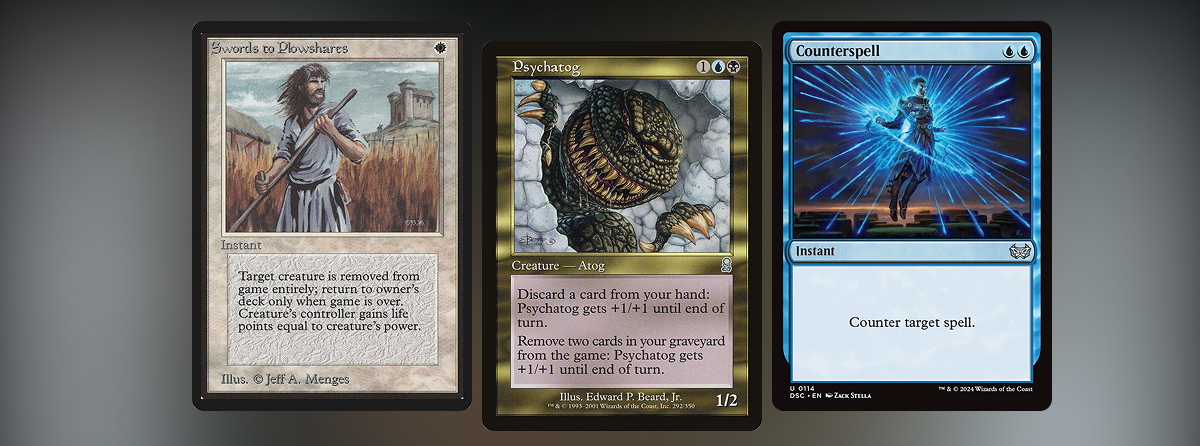
This was a game of inches–the game plan is for Mother of Runes to be protecting Ramosian Sergeants which allows for Whipcorders to flood the board allowing the deck to swarm them until they’re forced to resolve a Psychatog just to stem the bleeding.
Whipcorders tapping their Tog prevents it from easily stabilizing the board, allowing you to nickel and dime them as you hold a second flood of threats in your hand should they finally resolve a sweeper.
Postboard you swap Exalted Angels for Glowriders, keeping in Disenchants to counter Powder Kegs. If you see Infest/Massacre, you side out Disenchants instead of Exalted Angel–and lean on her 5 toughness and 6cc to dodge sweepers and Smothers.
Decks like this are why the list runs a low curve. Early threats to force interaction, resolve more expensive spells when they tap mana to interact with the smaller threats. Mother of Runes is a must-answer, Ramosian Sergeant is a must-answer, even Whipcorder is a must-answer. If they ever get to the midgame it gets easier for them to answer everything as you cast them–so the initial threats you play in the first few turns become key cards in determining how to sequence your threats.
In this game both my Moms and my Sergeants resolved–leading to threats that were hard to kill, and card generation to keep up with their own Gush draws. Without Massacres or Infest my board became too unwieldy to be tamed and I slowly closed things out with too many bears.
2nd Round: 2-1 Hermit FEB
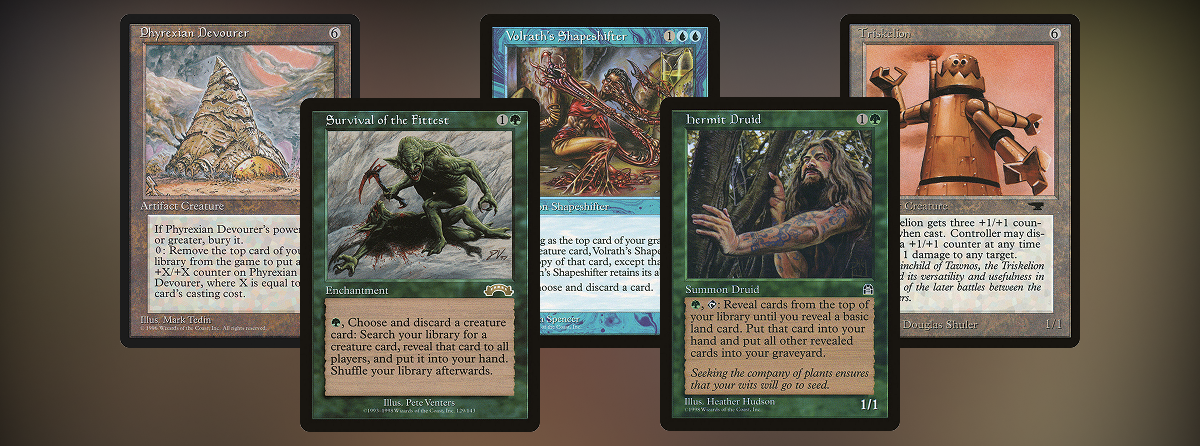
I learned recently that one of the pain points of the Breakfast deck is their mana. Something I didn’t know the first few times I’ve faced the deck, but changed the way I thought about my cards because of it.
Playing white, I have a lot of Disenchant effects to prevent them from getting too much value from their Survival of the Fittests. At the same time, my Plow/Tormod’s duo allowed me to fight their fast Hermit Druid plan. This gave me an angle of interaction for the combo side–the real difficulty is pressure more than anything.
A recent change I made was Soltari Priest, especially for bulky green decks. The ability to run past elephant tokens, Wall of Blossoms, or Wall of Roots allows me to keep them on a clock–while protection from red circumvents their Pyroclasm postboard plans from stemming the bleeding.
This combination of disruption and hard to block threat is what allows my maindeck Wastelands to really be impactful. Setting people back a land drop is only relevant if there is enough damage on the board that they can’t just wait for 1-2 more land drops to help them stabilize.
Postboard the plan is primarily to side out Exalted Angel and Ramosian Sergeants for 4 Crypts + 4 Disenchant. Your slow clock is at its weakest in matchups like this, but you still need enough interaction to slow them down as much as you can.
Tormod's Crypts + Pressure is often enough to slow down their ability to make a fast Hermit Druid plan work–this allows you to use your Swords to Plowshares on their Wall of Roots and Birds of Paradise should you draw your Wastelands.
Otherwise, it's best to hold on to your STP’s to interrupt their Doppelganger draws. Use your Swords to Plowshares on the wrong target and you’ll almost immediately lose this matchup.
All your cards change roles depending what order you draw them and what order your opponent resolves their spells. You don’t want to be using your Whipcorders to port their Birds of Paradise in the midgame–but you need to slow them down if their mana is tight when needed.
The game played out like I mapped it out–definitely still felt behind, but now that I had a plan in place, I could see when his draws were weaker than he’d like. Game one was grindy, with me applying a lot of pressure and him being a mana away from killing me for several turns. I counted his lands every turn to math out what sequences he could have that could kill me, and I made my decision on when I could tap out or when I should be holding up mana for Swords to Plowshares–or when to hold up mana to present Swords to Plowshares.
True Believer was clutch here, as his ability to stop Cabal Therapy from hitting Swords to Plowshares was crucial in allowing me to keep interaction live.
Postboard it was grindy again, but from a different perspective. Between walls, Ghitu Slingers, and Survival–he was able to slowly get resources into hand and the battlefield. I thought I had answers to almost everything he had until he just hard cast a Triskelion for 6 mana. The game was essentially over but I spent a few turns gauging where I misplayed before scooping up.
Game 3 was pure luck. I kept a hand of almost too much interaction and no threats save for one Mother of Runes. Didn’t matter though, because I drew 3 Wastelands and plowed his mana dorks all while attacking for 1 damage a turn with Mom.
I eventually drew lands before he did, played threats on the board and killed him before he could draw another land.
3rd Round: 0-2 Goblins
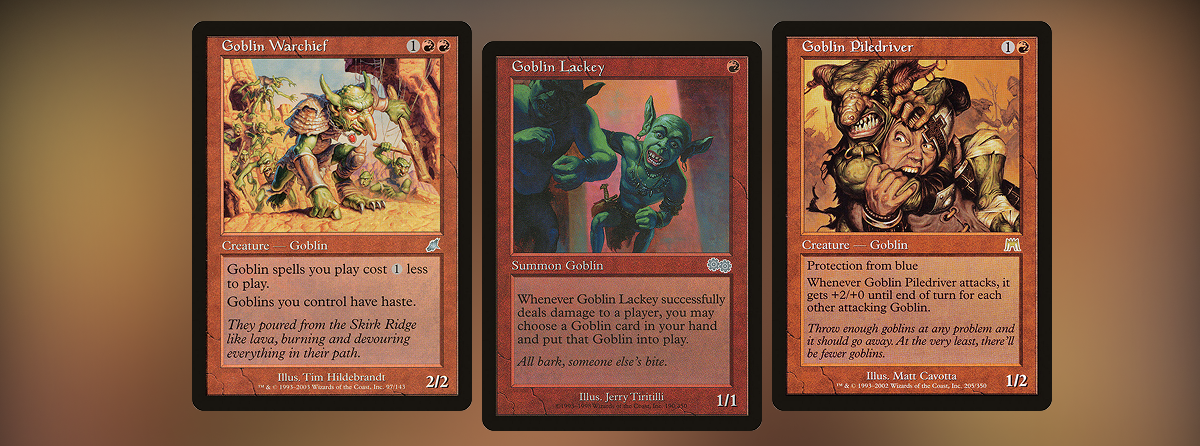
The first game was a close loss, but game two was just a comedy of errors. I had a fast draw that almost immediately killed him–but a greedy Exalted Angel unmorphing allowed a topdeck Anarchy to wipe my board.
The comedy came when neither of us could draw threats.
Around the time he had 14-15 or so lands to my 10-11 lands he finally drew creatures while I drew more lands.
I learned a lot from this game, but lessons are for the following rounds not the current one.
4th Round: 2-0 RG Oath
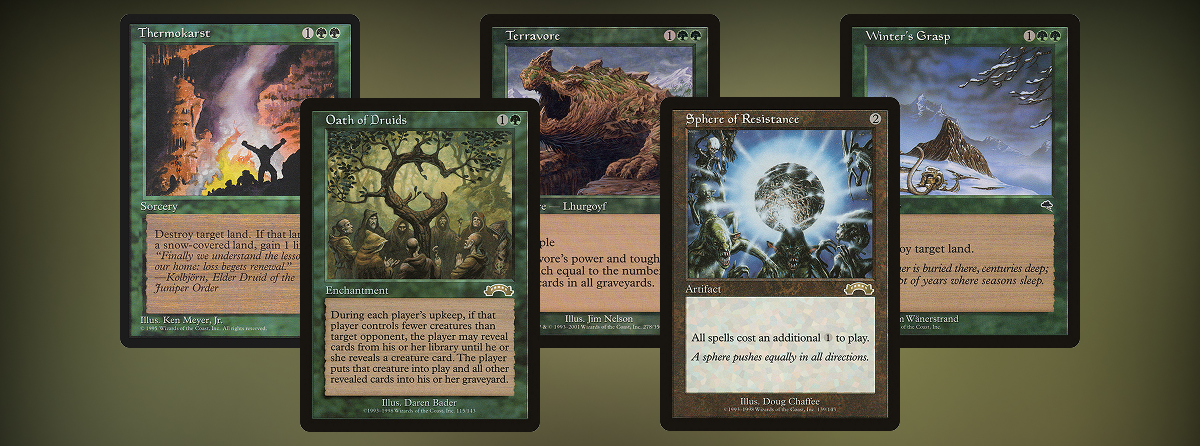
True Believer was initially added to my list to answer Brain Freeze/Altar of Dementia/Fling combo decks. A threat they needed to answer to get their combo to work.
The first time I drew it against an Oath of Druid deck my heart sang–as it turns out that it stops that too.
This turned my list from a near autoloss to many Oath lists if I didn’t draw my disenchant effects, to one where I now have 8 maindeck answers to Oath.
The plan is simple.
My curve is low, so I can resolve a lot of threats before I run out of lands or mana.
Mother of Runes + Soltari Priest + Reverent Mantra means I can fight back against their Pyroclasms.
Swords to Plowshares + Whipcorders means I can fight against the creatures they do reveal with Oath.
Ramosian Sergeant means that Sphere of Resistance + Rishadan Ports does not stop me from continuing to resolve more and more threats.
Postboard I side out Exalted Angel (on the Play) or Savannah Lions (on the Draw) for 4 Abolish as 8 Disenchants not only stops Oath–but also Mox Diamonds, Sphere of Resistance, Sylvan Libraries, and Mishra's Factories.
The deck plays simple postboard–kill all their permanents, use early threats to get their life total low enough that in the midgame Soltari Priests/Mother of Runes are able to push through damage while Whipcorders stall their threats.
This was most evident in game 2 of this game–as I had three Whipcorders tapping all his Manlands preventing them from blocking my threats. All while Ramosian Sergeant continued to keep adding more and more creatures to the board.
5th Round: 0-0 Burn (intentional draw)
Top 8
Quarter Finals: 2-0 Gro-Tog Control
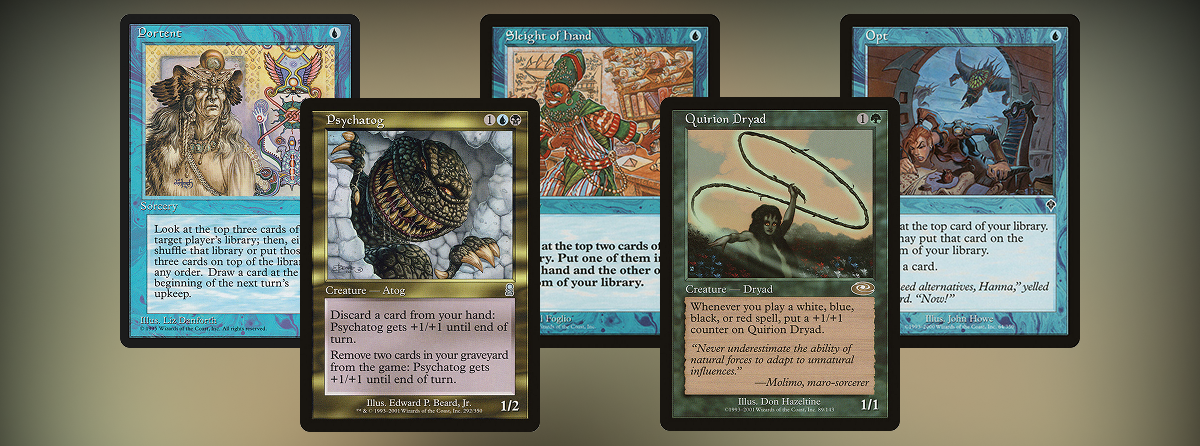
Not going to lie–I had no clue what I was facing when I played against this list. Three islands into a City of Brass was just too alien to me. So I just assumed a repeat of my first round–a Psychatog deck with spicy sideboard cards–hence the City of Brass.
I played conservative–leaning on my early one drops and holding back threats in case of a sweeper. I kept a disenchant in hand waiting for a Powder Keg or Oath of Druids.
Quirion Dryad showed up instead.
I got worried about Gush/Foil from stopping my Swords to Plowshares–so I just hoped Mother of Runes + Whipcorders would be enough to stall it as I found ways to chip in damage over time.
The plan was simple. Hold on to my Swords for as long as possible, and don’t put more Whipcorders in play than Quirion Dryads. If I can just keep one tapped with a mom out to protect–then any Wrath of God effect would also kill the Quirion Dryad.
This worked for a bit until Psychatog showed up.
At this point I had a Soltari Priest chipping in unblockable damage–but now I knew he had 8 fatties and I only had 4 Whipcorders. Time was not on my side even if he did not run sweepers–which I assumed he did. Lucky for me, I had enough pressure to get a scoop.
Game two played similarly–the one exciting moment coming from me casting Mother of Runes on T1, and stopping his Swords to Plowshares with my Reverent Mantra giving me the “Force of Will” moment that allowed me to untap my Mother of Runes.
As soon as that happened (after he tapped mana for the Swords to Plowshares) I resolved a Sergeant the following turn–now protected by the Mom. A repeat of game 1 occurred until I finally got the concession.
Semi Finals: 2-1 Hermit FEB (rematch)
Same opponent, same game plan.
Game 3 was the pivotal game where he had a lot of land drops, and I drew a lot of interaction but very light on threats.
But not too light–luck was with me another time.
At one point I had Plowed almost all his mana dorks and disenchanted his survivals while having Tormod's Crypts in play to stop any shenanigans–yes, more than one. And I drew enough Wastelands to hit every land he had that tapped for pain free colored mana.
I had dealt just enough damage that he was down to 1 life with 6 painlands on the battlefield. The game slowed to a crawl at this point. A Pyroclasm cleared my board at the cost of leaving him at 1 life–and the topdeck war began. I eventually drew enough threats to push through the last point of damage.
Finals: 2-0 Goblins (rematch)
Game one is all about Exalted Angel. Before postboard Anarchy, this is the one card that allows you to trump their deck. But 7 mana over two turns is really hard.
Lucky for me, the combination of Soltari Priests and Exalted Angel was enough to win the first game.
Game two was the tighter game.
Just like during the swiss, I sided out 4 Disenchant for 2 Worship and 2 Glowrider.
No, Glowrider is not good versus Goblins. But it has a body, and Disenchant does not. So he came in today. Surely it wouldn’t matter?
Of course I drew the Glowrider…
But I also had Moms, Whipcorders, and Soltari Priests.
In the end he dealt 4 damage and blocked a Siege-Gang Commander. I won the race by 1-2 points of damage all thanks to the 3cc 2/1 with essentially no other game text.
The game itself was insane–with my opponent having so many tricks available with his Goblins that it was hard to know what plays were optimal and what weren’t.
A common side effect of an 8+ hour event.
Brains were fried, hands were shook, and lots of laughter ensued.

Ready to build?
If this article inspired you to join the action, TradeMagic makes it easy to source the cards you need. Trade cards you have for cards you need using our peer-to-peer platform—perfect for assembling Premodern decks without spending cash on every card.
Sign up free and get 1,000 starting points ($10 in buying power).
Keep reading
- Sustainable Economics Pt. 3: Year One
TradeMagic just turned one! Here's the year in four charts & where the economy stands - How It Works: Collection Focus Mode
One click collapses everything on My Cards except the search and your list, then makes the cards big. - What's New: Focus Mode, Trade Offer Revisions, and Sidebar Mode on /sendcards
Focus